Gold is back in the spotlight. This year alone, spot gold has surged more than 30% as investors grapple with geopolitical tensions, inflation concerns and currency volatility. Let’s find out what’s driving this rally, and what it means for portfolios today.
What’s fueling the rally
1. Safe-haven demand and a softening dollar
Gold is reaching new highs, spot prices recently broke above $4,300/oz, driven by rate-cut expectations in the U.S., a weakening dollar and escalated U.S.–China tensions. At the same time, gold ETFs recorded their largest inflow in five years: roughly $38 billion and 397 metric tons in the first half of 2025.
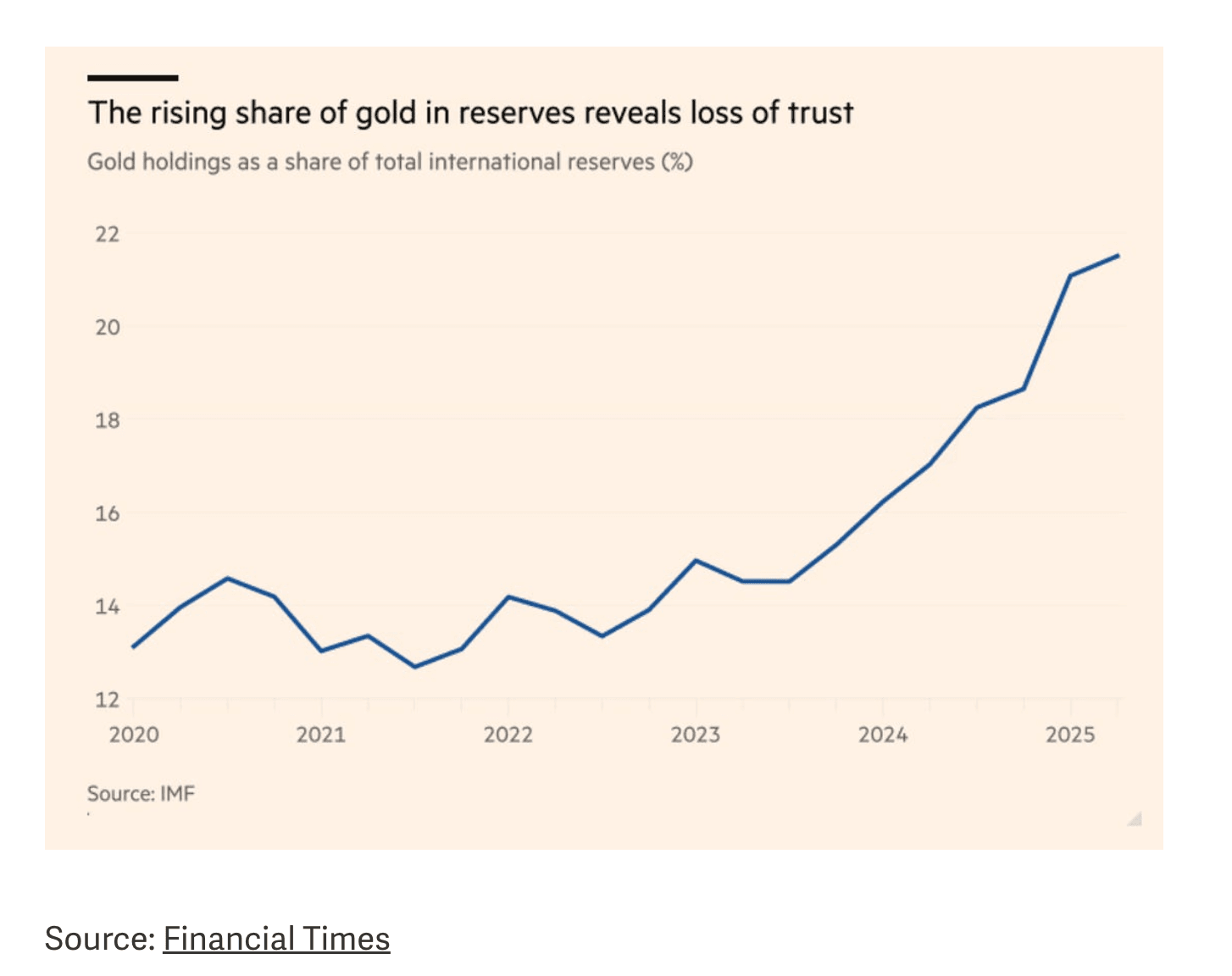
2. Central bank accumulation
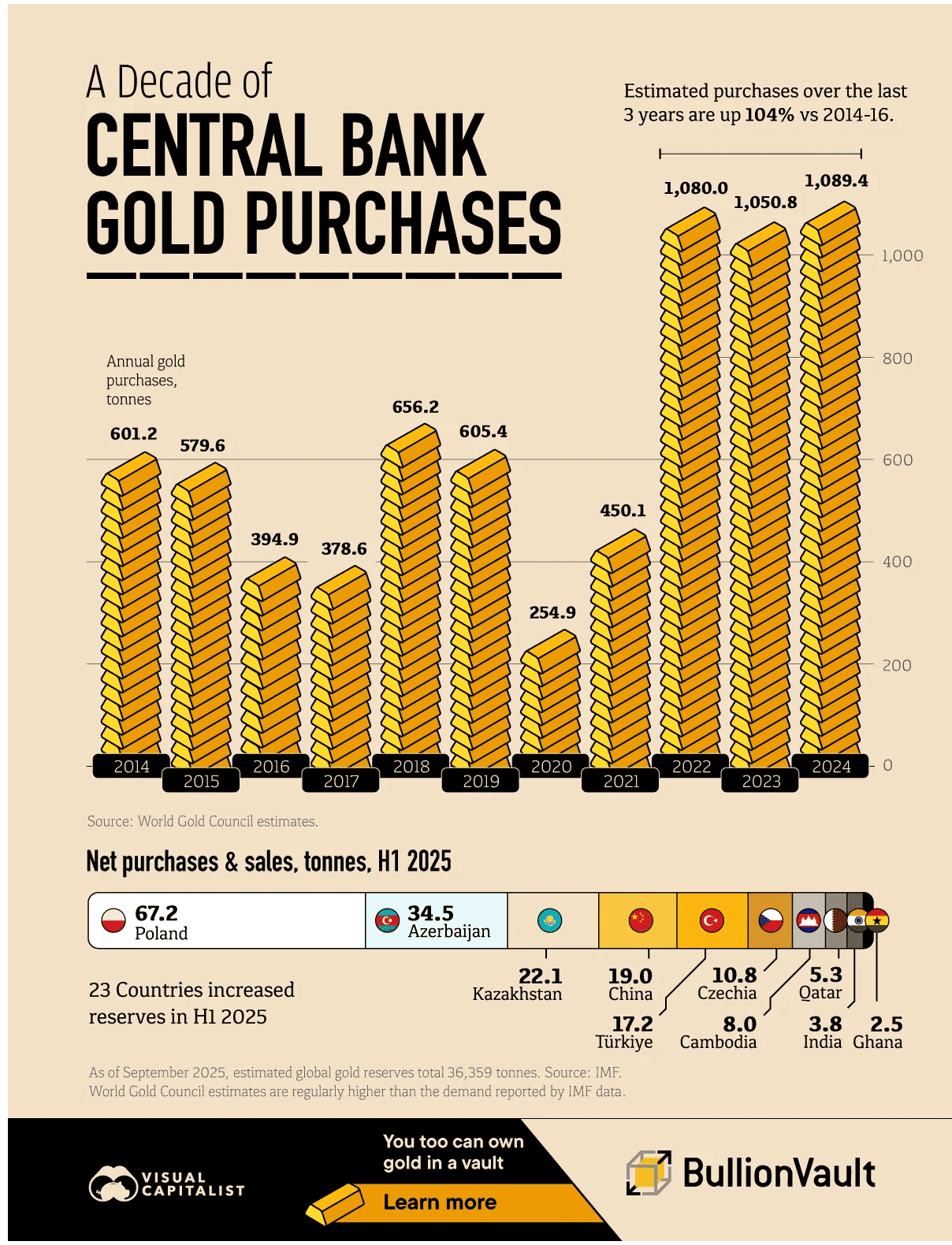
According to Metals Focus, central banks are on track for a fourth consecutive year of substantial gold buying, 1,000 metric tons expected in 2025, supporting the structural backdrop.
What this means for your portfolio
- Diversification continues to be an important consideration, despite gold no longer behaving purely as a hedge. In earlier decades, gold’s correlation with equities hovered near zero (~0.06), meaning it moved independently. Now, gold and stocks are rising together in parts of the cycle, reducing the clean hedge benefit.
- Opportunity cost and volatility matter. As the price continues to climb, the opportunity cost of holding other assets rises, and the risk-reward becomes more compressed.
- Diversification remains the key lens. Rather than viewing gold as a guaranteed protector, it’s better framed as one component of a well-rounded portfolio. It may shine in inflationary or high-risk scenarios; in a strong growth or stable inflation environment, it may lag.
Still, it’s worth asking a more fundamental question; what if your portfolio holds no gold at all? Gold is a real asset, but it’s also a non-productive one: it doesn’t generate income, dividends, or cash flow. Other real assets, like public equities, private equity, infrastructure, or real estate, are also backed by tangible or intellectual property, yet they generate returns through growth and income. When you chart gold’s performance against these asset classes, the difference becomes clear. The recent surge isn’t being driven by a weak dollar alone, but by a wave of speculative demand. And demand, like sentiment, can shift. If capital flows toward income-producing real assets or investors take profits, gold’s momentum could unwind quickly. After all, anything that doubles in value without producing a real return can just as easily halve in value. Gold’s gains are still measured in U.S. dollars, and the dollar remains the ultimate medium of exchange and store of purchasing power.
How to interpret the signals
- Prepare for multiple scenarios. The rally may continue if inflation persists or geopolitical risk rises. However, if global growth picks up or holders shift to other asset classes to take profits, gold could underperform.
- Manage your exposure: The exact timing of gold’s peak or pull-back is unknowable. That argues for managing the allocation size rather than trying to time the top.
- Use globally-aware portfolio structure. As with other assets, if you add exposure to gold to your portfolio, have it aligned with your broader global strategy, not treated in isolation.
Disclaimer: The value of investments in commodities such as gold can fall as well as rise. You may lose some or all of your money. Past performance is not a reliable indicator of future results.
Frequently asked questions
Why has gold been rallying?
Three forces. (1) Central-bank buying — emerging-market central banks adding gold to reserves at meaningful pace. (2) Geopolitical uncertainty — wars, sanctions, and reserve-currency debates supporting safe-haven demand. (3) Currency-debasement concerns — meaningful fiscal deficits across major economies supporting hard-asset valuations.Should I add gold to my portfolio?
A modest allocation — 3-7% — typically improves portfolio risk-adjusted returns by adding a low-correlation asset. Larger allocations are typically a directional bet on specific scenarios rather than a diversification strategy.How do I get gold exposure?
Three primary routes. Physical gold (most pure but operationally expensive), gold ETFs (most liquid and convenient), or gold-mining equities (higher beta to gold price but with equity-like business risk added). For most diversified portfolios, gold ETFs are the cleanest implementation.
Related reading
More on Markets & macro
- NewsletterWhat 2025’s Market Turbulence Is Teaching InvestorsResearch shows that investor behaviour — staying invested, rebalancing, avoiding reactive decisions — has more impact on outcomes than any single market call.
- NewsletterIs the AI Boom a Bubble, or Just the Beginning?AI valuations are soaring — but is it sustainable? Discover what's fuelling the hype, where risks lie, and how MENA investors can stay exposed and protected.
- NewsletterUS Fed Cuts Rates: What That Means for Global InvestorsThe Fed cut rates by 25bps — what does that signal for equities, bonds, and gold? Learn how global investors should interpret easing cycles and diversify.