
An Introduction to Core and Satellite Investing
In the world of finance, adopting a ‘one-size-fits all’ approach, can be ineffective. Embracing the ‘Core and Satellite’ approach to investment, on the other hand, offers a well-balanced strategy for building a robust portfolio. This methodology entails dedicating a minimum of 50% of a portfolio to ‘core’ investments, such as diversified equities and bonds, which offer stability and consistent returns.
The remaining portion of the portfolio is then allocated to ‘satellite’ investments — this is where alternative investments come into play.
The Value of Alternative Investments
Alternative investments - private equity, private real estate, and venture capital amongst others - provide completely unique opportunities that can enhance portfolio diversification.
Private equity generally refers to investment in companies that are not listed on a public exchange, providing capital for new innovations, developments, or restructuring. Venture capital, a subset of private equity, specifically targets startups and young companies with high growth potential. Private real estate, on the other hand, refers to investment in properties that are not publicly listed, offering a tangible asset that can generate rental income and potential capital appreciation.
With a recommended allocation of 5% or less in each individual investment, they serve as valuable tools to hedge against market volatility, potentially offer higher than normal returns, and provide access to more exclusive sectors not typically available through traditional investment avenues.
The Dilemma Clients Currently Face
For many clients today, access to these alternative investments can often be a challenge. Many alternative investment opportunities carry very high required investment minimums, making them more accessible only to Ultra-High Net Worth Individuals (UHNWIs) and Family Offices. This lack of accessibility ends up hindering effective diversification and limiting the benefits that alternative investments can bring to an investment portfolio for many.
That access gap is the subject of The 90% You Can’t Buy, an interactive look at why roughly 87% of large companies stay private, and how endowments allocating 30% or more to private assets have compounded ahead of conventional portfolios for four decades.
Abu Dhabi Investment Authority (ADIA): A Model of Diversified Investing
One notable institution that has managed to effectively structure its portfolio with a mix of traditional and alternative investments is the Abu Dhabi Investment Authority (ADIA) . With an estimated USD 70 billion under management, their asset allocation strategy provides a valuable blueprint for diversified investing.
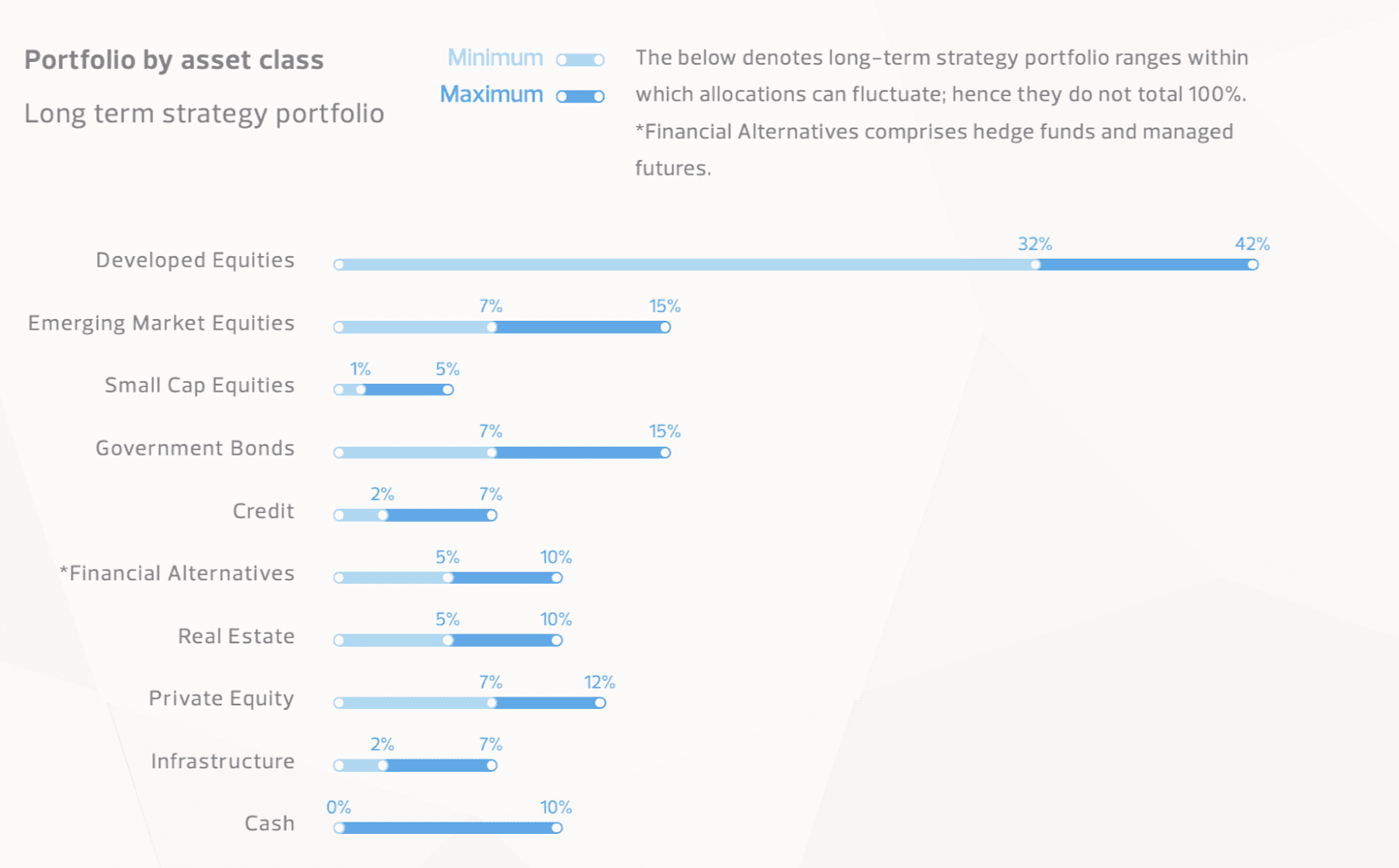
Source: ADIA
ADIA has crafted a diversified investment portfolio, not just across different asset classes, but also across geographies and sectors. The Authority’s commitment to alternative investments demonstrates the potential such assets have to enhance portfolio performance while mitigating risk.
Making Alternatives Accessible: The Path Forward
For clients to truly benefit from portfolio diversification, the financial industry must strive to make alternative investments more accessible. Reducing minimum ticket sizes, democratizing access to exclusive deals, and educating investors about the benefits and risks of alternative investments are all essential steps to achieving such a feat.
All in all, alternative investments offer an exciting frontier for investors seeking to diversify beyond traditional asset classes. Embracing a ‘Core and Satellite’ approach to portfolio construction can offer a powerful blend of stability and growth potential to investors at all levels of wealth.
Frequently asked questions
Why move beyond a 60/40 portfolio?
Because 60/40 implicitly assumes that bonds will hedge equity downside — which has been mostly true historically but failed dramatically in 2022, when both fell together. Adding alternatives with genuinely uncorrelated return drivers improves portfolio resilience to that scenario.What kinds of alternatives diversify best?
Three categories. (1) Private credit — direct lending and other credit strategies with different cash-flow characteristics than public bonds. (2) Infrastructure — long-duration real assets with inflation-linked cash flows. (3) Real estate in private structures — diversified across geographies and asset types.How much should the alternative allocation be?
For HNW investors with appropriate horizons and liquidity tolerance, 15-25% of investable wealth in alternatives is a common range. Endowments and family offices often go higher (30-40%) — but they have institutional infrastructure that individual investors typically don't.What's the catch?
Illiquidity and selection risk. Alternatives are typically much less liquid than public-market equivalents — capital is committed for 7-10+ years. Manager selection matters dramatically more than in public markets. The right framing is to treat alternatives as a long-horizon component sized to your genuine liquidity capacity.
From Vault
Private market access at Vault sits at the upper tiers rather than being reserved for eight-figure relationships.
Related reading
More on Alternatives & private markets
- InsightThe Pre-IPO SPV Problem: Everyone In Between Eats FirstThe Wall Street Journal traced what happened to investors who bought pre-IPO SpaceX through stacked special purpose vehicles — four and five layers from the cap table. An interactive briefing: model the fee cascade, walk the ownership chain, and see the route that held the shares directly.
- InsightThe 90% You Can't Buy: Why the World's Best Companies Stay PrivateThe world's most valuable companies no longer ring opening bells. They compound quietly — owned by institutions, endowments and the families invited in early. Scroll the story, model your allocation, and see if a private-markets sleeve fits your portfolio.
- InsightPortfolio-Building with Institutional Private EquityLearn how to access institutional private equity and Professional Client status with a fiduciary wealth management service in Dubai.